Inside Township Line Pizza: How Sarkis Took 80% of His Delivery Customers Off Grubhub
Sarkis turned around a struggling Township Line Pizza by getting customers off Grubhub and DoorDash: price markups, a printed card with a QR code in every box, and $5 off for ordering direct. Result: 80% of Grubhub orders moved off the app.
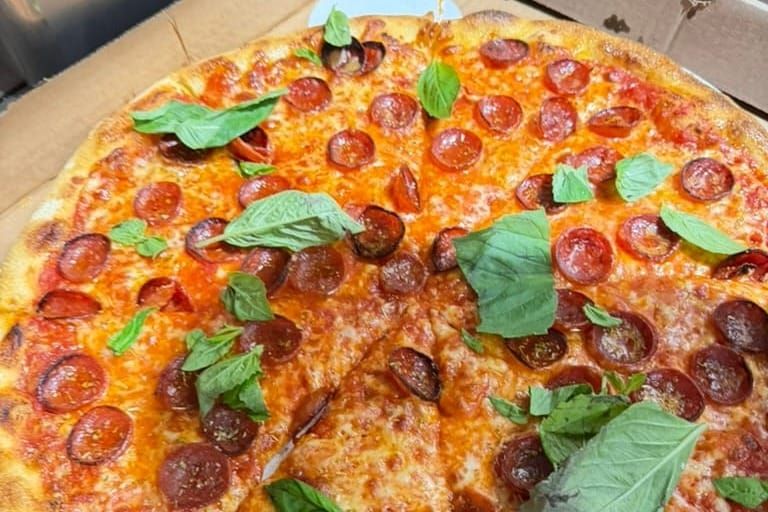
Sarkis bought a pizza shop with holes in the floor. He could stand in the kitchen and see straight down into the basement through the gaps. In Episode 613 of the Smart Pizza Marketing Podcast, I sat down with Sarkis from Township Line Pizza in Drexel Hill, Pennsylvania, just outside Philadelphia, to talk about how he took over a shop that was going out of business and built it into one that's now cutting DoorDash and Grubhub out of the picture almost entirely.
Sarkis went to culinary school and cooked in fine dining kitchens in England before he ever touched a pizza shop. That background shows up in everything he does now: the food he makes from scratch, how he picks the influencers he works with, and the system he built to get customers ordering directly from him instead of paying DoorDash's markup on every order. We get into all of it.
A Failing Shop in the Best Location Around
When Sarkis found Township Line Pizza, it wasn't posted on a business-for-sale site. It was a Craigslist ad from an owner who couldn't make rent and was choosing between selling the shop or walking out on the lease and selling off the equipment piece by piece. Sarkis grew up a mile away and had driven past the building for 25 years without knowing it was for sale.
The shop itself was rough. Four layers of cheap flooring had been laid on top of each other over the years, and parts of it were breaking apart. But the location was as good as it gets: the road out front carries over a million cars a year, it's one of only two roads that connect the area to Philadelphia, and it sits between two of the wealthiest neighborhoods on either side of the street.
The previous owner failed anyway, and Sarkis points to one reason: consistency. The mozzarella sticks changed brands week to week depending on whatever was cheapest at the restaurant supply store that day. Nothing on the menu could be counted on. Customers plan their dinner around you, and the first time you disappoint them, they've got a hundred other options waiting down the street.
Made From Scratch Is the Point, Not a Slogan
Sarkis's fine dining background means his shop makes things most places buy premade: chicken tenders battered in house, sauces built from scratch, even the potato bread for the sandwiches. The cheesesteak egg rolls alone, made with real steak instead of the ground beef and processed cheese most distributors sell, turned into one of the shop's biggest draws.
The math works because the labor is already there. "My guys are standing around anyway waiting for orders," Sarkis said. "Might as well have them prepping while they wait." One scratch-made chicken sandwich now accounts for close to 30% of total sales, and it pulls in customers who then discover the pizza. Sarkis is upfront that he doesn't make everything from scratch. He still buys his mozzarella sticks. He picks the few items worth the effort and advertises those, not the shortcuts.
Local Micro-Influencers Beat Big Ones Every Time
Sarkis doesn't chase influencers with huge national followings. A creator with a worldwide audience is expensive and mostly useless to a shop that only delivers within a few miles. He'd rather work with someone who has 2,000 to 10,000 followers and an actual local audience.
Before saying yes to anyone, he checks who's commenting on their posts. Real engagement from people in the neighborhood is the signal. A brand-new account with only friends commenting isn't. He also tracks what format actually performs. A carousel of photos from one creator did nothing. A single video from another, with the sauce dripping off the sandwich, kept people watching a couple seconds longer and turned into real foot traffic. He builds on whatever's already working instead of guessing.
He treats the influencers who show up like partners, not vendors. He tells them the shop's real story, including the holes in the floor when he bought it. And he calls other local businesses an influencer has visited to ask what they paid and what they got back before he agrees to anything.
The Card That Got Customers Off DoorDash
This is the part of the conversation worth the price of admission. Sarkis's shop had used third-party delivery since day one, cycling through Grubhub, ChowNow, Uber, and DoorDash as drivers came and went. A few years ago, after meeting the founder of Owner.com at a pizza industry convention, he built a system to move customers off those platforms and onto his own.
The setup is simple. Every price on the third-party apps carries roughly a 30% markup over what the same item costs ordering direct: a large cheese that's $15 in the store lists for $20 on DoorDash and Grubhub. Every box and bag that goes out for delivery gets a small printed card with his logo and a photo of the pizza, tucked in where the driver won't see it. The card carries a QR code straight to his own ordering site, with $5 off built in. "Why are you ordering third-party when you can order direct?" is the message on the card. "The price on DoorDash is $20. The price on my website is $15. Save $5 and cut out the middleman."
Setting up an account to redeem that discount means Sarkis gets an email and phone number. Anyone who opts in gets automated monthly offers through the same platform, no extra work required. Within a month of rolling the cards out, Sarkis had moved 80% of his Grubhub customers and 50% of his Uber and DoorDash customers over to ordering direct. He estimates it's saving him $5,000 a month.
Why It Worked: The Real Math on Delivery Apps
Sarkis walked through the numbers on a $100 family order. Add the markup and it's $130. Add a delivery fee of $12 to $15. Add another $8 to $12 in platform fees. Tip the driver on the inflated total, not the real one, and that $100 order costs the customer $170 to $180 by the time it lands on their table.
DoorDash ends up making close to what the shop makes on that order. Customers who'd normally order four times a week can only afford it twice, so the shop's food turns over slower and the customer is left needing two other ways to feed their family that week. The driver has no stake in whether the food shows up hot or the customer comes back. "Your customers are unhappy. They got to pay more," Sarkis said. For a shop owner, none of that math works in your favor.
Sarkis isn't dropping the apps altogether. He still sees them as a way for new customers to find the shop for the first time. The card in the box is what turns that first order into a direct relationship instead of a one-time DoorDash transaction.
Listen to the Full Episode
Hit play above, or find Episode 613 wherever you get the Smart Pizza Marketing Podcast. It's about 45 minutes, and if you're handing DoorDash and Grubhub a cut of every order, this is the episode to start with.
Sarkis's Playbook for Cutting Out Third-Party Delivery
- Mark up delivery app menu prices about 30% to cover the commission
- Drop a printed card in every box: shop logo, a photo, and a QR code hidden from the driver
- Offer $5 off the next order for anyone who orders direct
- Capture email and phone number at signup
- Automate monthly offers through the ordering platform
- Result: 80% of Grubhub orders and 50% of Uber Eats/DoorDash orders moved direct, saving about $5,000 a month
Get one of these every Tuesday.
A real shop, the real numbers, and one thing worth trying. Free.