Inside Violent Stone: 45 Employees, No Servers and a 90% Margin Item
Dan had zero restaurant experience and a plan to sell 20 pizzas a day. Now Violent Stone does about 500 on a Friday, cut servers after 30 days, and lives off a homemade fried mozz.

Dan didn't have a plan to build a big pizza shop. His plan was 20 pizzas a day.
"If I can sell 20 pizzas a day, I'll be profitable, I can live off that, and I get to hang out at the beach." His logic was simple: if he couldn't sell 20 pizzas a day, he was an idiot.
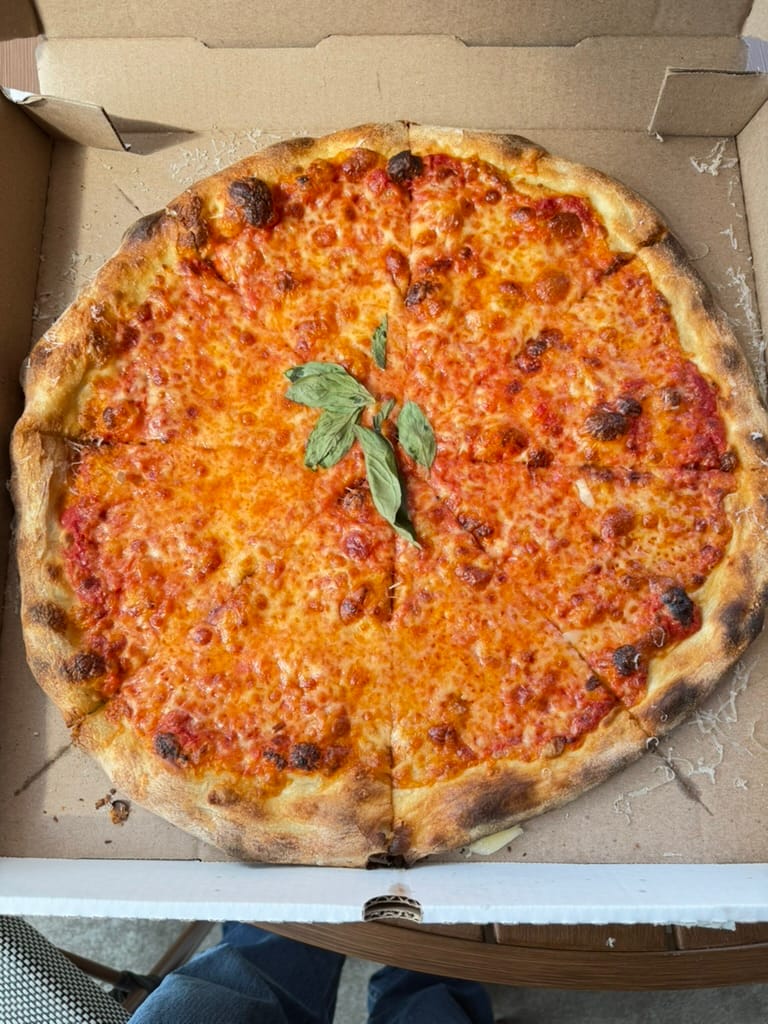
Now Violent Stone in St. Petersburg, Florida has about 45 employees in one location, does around 500 pizzas on a Friday, and just signed a second spot in Tampa.
Listen to (and watch) the full episode on Spotify
The numbers
- About 45 employees in one location.
- Around 500 pizzas on a Friday. About 100 pizzas an hour, plus about the same number of cheesesteaks.
- About 70% of the business is takeout.
- Roughly a year and a half of record months in a row.
- Build out was about $400,000.
- Fried mozz: close to 90% profit, about 30 orders a day.
No restaurant experience
Dan grew up in Northeast Philly. He spent his 20s at a tech startup that blew up, then got tired of it getting corporate. He moved to Florida, thought about doing a cafe, saw someone already doing exactly that, and said screw it, pizza.
He'd been making pizza in his neighborhood during COVID. That was it. They started as a food truck with a coal fire setup on the back of a trailer, but it only fit three pizzas at a time and couldn't scale.
At the first spot, it was just him. Open four days a week, five hours a day. "I was working 100 hours to be open 20." Everything is from scratch, including the sausage.
Well done pizza and cheesesteaks
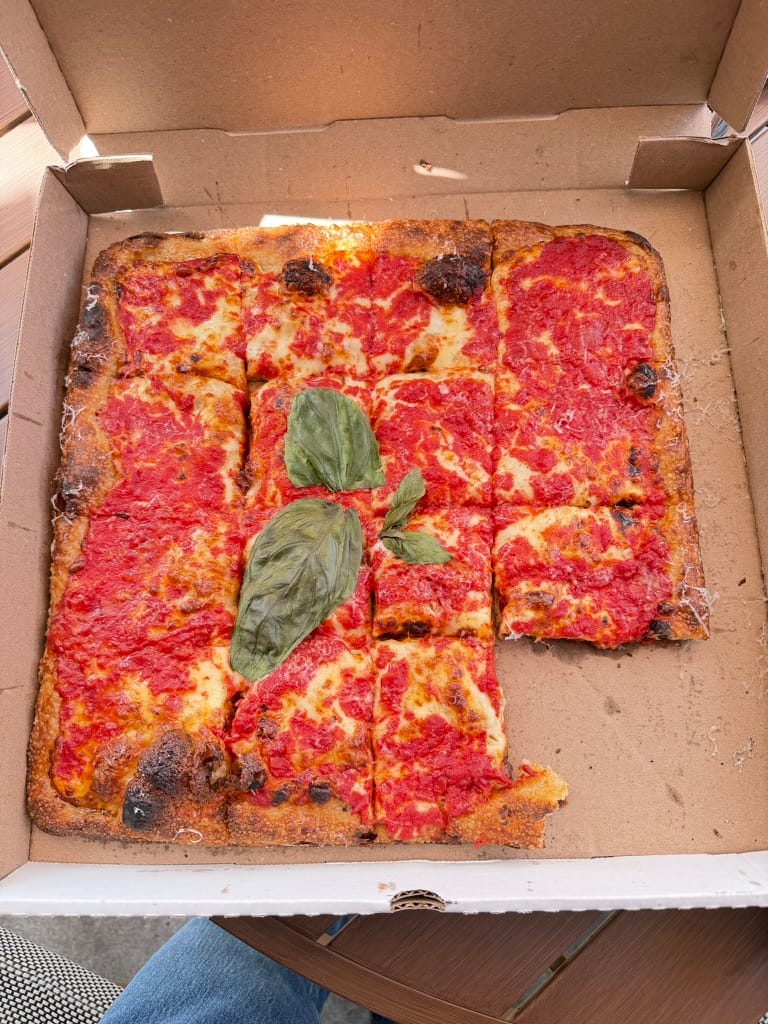
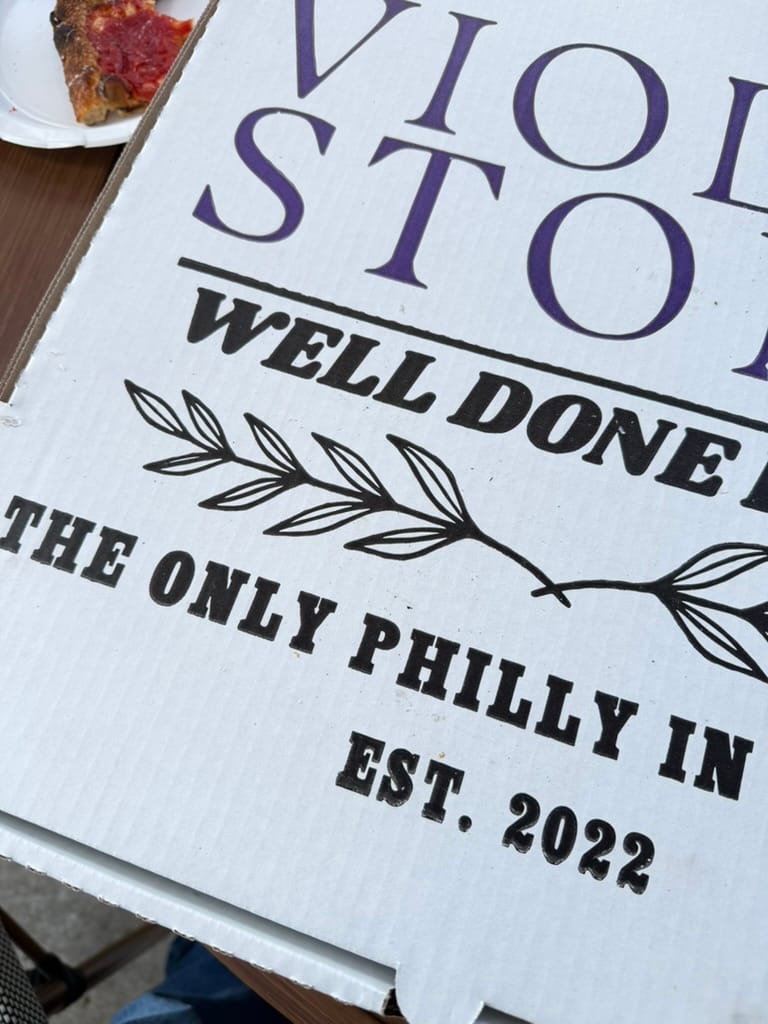
Violent Stone is Philly inspired: well done sourdough pizza and cheesesteaks, beer and wine, and a dining room that looks like an old school deli. Dan grew up on well done pizza, and he says it's really hard to find in Florida.
The pizza side runs 16 inch rounds, a Sicilian square, and 10 inch thin bar pizzas for lunch. The cheesesteak roll is their own, built heavier to hold about 10 ounces of rib eye and 7 ounces of Cooper Sharp.
Lunch and dinner flip. It's about 80/20 cheesesteaks to pizza until 5pm, then it switches.
Pizza prints money. Fried mozz kept him alive.
Dan says pizza runs about 70% profit, even with high end toppings. Cheesesteaks are their highest food cost item at about 38%.
The item that saved him early was homemade fried mozzarella. A case of mozzarella runs about $80, and it costs about $120 total to make around 100 orders. That's close to a 90% profit item, and they sell about 30 a day. "Fried mozz really kept me alive for the first few years."
They look at food cost every week. "If you're not doing it weekly, you're screwed." Early on there were days he paid employees more than he made.
They killed servers after 30 days
When they opened the new spot, they did traditional dining with servers. Within about 30 days they cut the whole program. It pissed some people off. But sales went up, tips went up, service got better, and customer complaints went down.
Food cost dropped too. They go through buckets of ranch now, but somehow weren't selling any when servers were there. Same with beer: they were selling about half of what they were buying.
Takeout is king
About 70% of the business goes out the door. Dan says the money is in the pizza box going out, and honestly the takeout customers are easier to deal with.
He used to be the "screw Uber, screw Slice" guy. Not anymore. "I have employees literally because of those things now. If I turned those off, I'd have to fire people."
The kitchen they outgrew
They projected maybe 300 pizzas on a busy night and 150 during the week. They doubled it. Now the Blodgett ovens run at max all day, set at 650 and hovering around 580, and Dan says they can't do more than about 500 out of that kitchen.
The line is about five people: stretch, sauce and cheese, dress, the oven, and a guy cutting and finishing. The speed rack for finished pizzas was one of his guys' ideas. Dan says he can make a pizza and a cheesesteak, but not as good as his guys. Listen to them and make them part of every decision.
For mixers, they buy small spiral mixers for about $1,200 and replace them every couple of months. A bigger one would run about $25,000 and need three phase power.
Never building out again
The build out was about $400,000. Dan says never again. The Tampa spot is second generation, an active restaurant with a bigger footprint, and it'll handle all the baking and a lot of the prep.
His rule: if they can't buy it in cash, they don't do it. Staying profitable is what makes that possible.
What a pizza owner can steal
- Have one high margin item you make yourself. Fried mozz paid the bills while everything else figured itself out.
- Look at food cost every week, not every month.
- If servers are costing you more than they bring in, try cutting them. Watch food cost and complaints.
- Take the third party orders if they keep your people employed. Just know your numbers.
- Next location, go second generation. Buy in cash if you can.
- Your crew knows the line better than you do. Let them fix it.
Thanks to our sponsor
The brand that makes this podcast happen

Cheese Hog
Buy the block and shred it yourself. You save money on cheese, and the Cheese Hog does it in about half the time you would on a Hobart. Super easy to use.
Visit Cheese Hog →If you want to talk through this stuff with other owners, that's what SPM PRO is for.
Get one of these every Tuesday.
A real shop, the real numbers, and one thing worth trying. Free.